+91 84849 90676
.cd78382e.png) info@artigenius.com
info@artigenius.com



Bharatanatyam is one of India's oldest and most revered classical dance forms. Originating in the temples of Tamil Nadu, it is a beautiful blend of rhythm, expression, devotion, and storytelling. Every traditional Bharatanatyam performance follows a structured sequence known as the Margam (meaning "path" or "journey"), guiding both the dancer and the audience through different layers of artistic expression.
Today, thanks to technology and expert-led learning platforms like Artigenius, aspiring dancers can learn and master these traditional stages through Bharatanatyam classes online, making this ancient art form accessible from anywhere in the world.
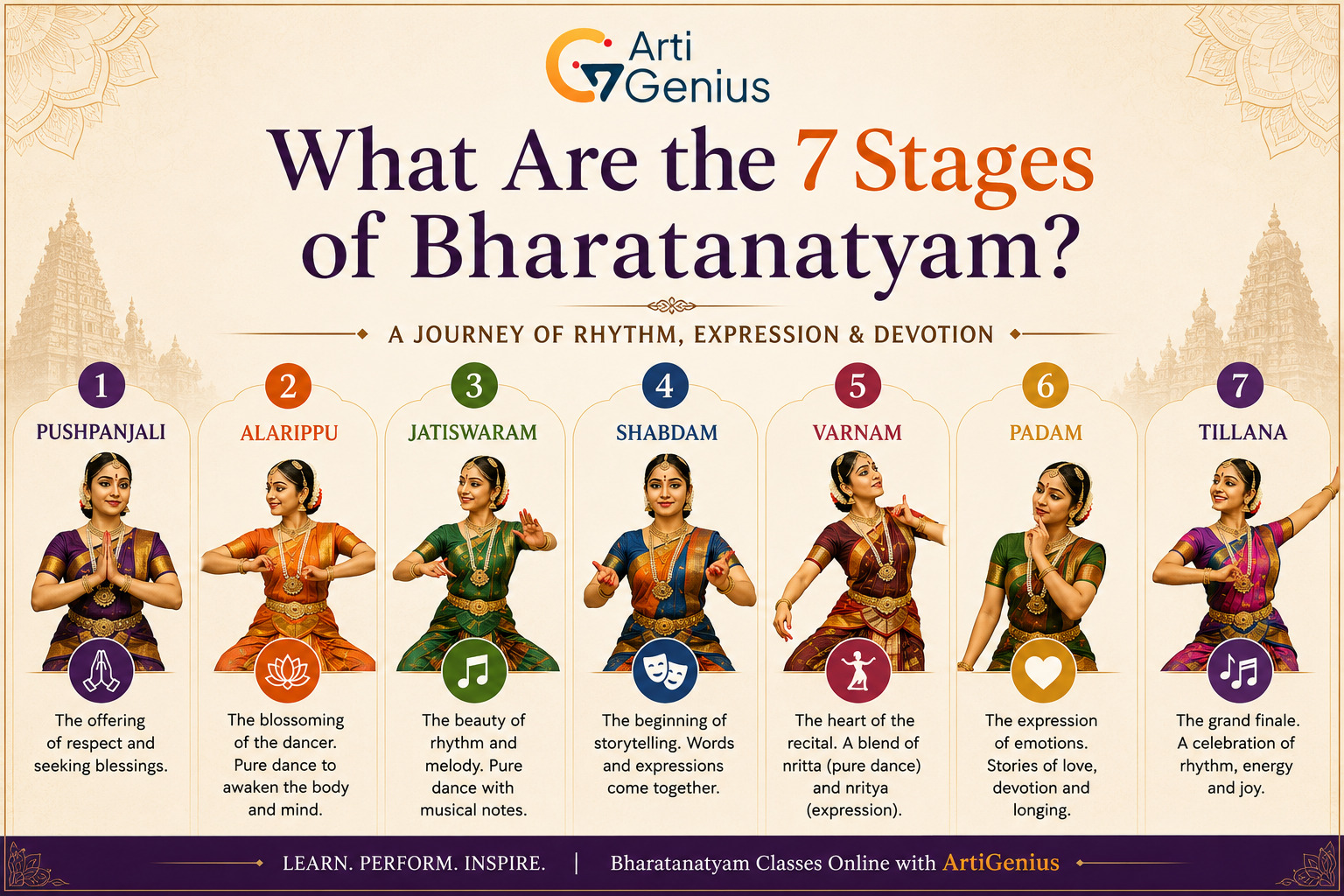
What Are the 7 Stages of Bharatanatyam?
The traditional Bharatanatyam performance is divided into seven key stages:
- Pushpanjali
- Alarippu
- Jatiswaram
- Shabdam
- Varnam
- Padam
- Tillana
Each stage serves a unique purpose, gradually building from pure rhythm to emotional storytelling and finally ending with an energetic celebration.
1. Pushpanjali – The Offering of Respect
The journey begins with Pushpanjali, which means "offering of flowers." This opening segment is dedicated to seeking blessings from the divine, paying respect to the guru, musicians, and audience.
The dancer enters gracefully, creating an atmosphere of devotion and humility. It establishes the spiritual foundation of the entire performance and prepares the audience for the artistic journey ahead.
Why It Matters
- Symbolizes gratitude and respect
- Creates a spiritual connection
- Marks the beginning of the recital
2. Alarippu – The Blossoming
The word Alarippu translates to "blossoming." This stage focuses entirely on rhythm and body movement without any storytelling.
Starting with subtle movements of the eyes, neck, and head, the dance gradually unfolds into full-body coordination. It acts as a warm-up that prepares the dancer physically and mentally.
Key Features
- Pure dance (Nritta)
- No lyrics or narrative
- Improves posture, coordination, and rhythm
For students attending Bharatanatyam classes online, Alarippu is often one of the first performance pieces taught after mastering basic adavus.
3. Jatiswaram – The Beauty of Rhythm
Jatiswaram combines intricate footwork with melodic patterns. Unlike Alarippu, it introduces musical notes but still avoids storytelling.
This stage showcases the dancer's technical precision, balance, and understanding of rhythm. Geometric body movements and synchronized footwork create visually stunning patterns.
What Students Learn
- Advanced adavus
- Musical interpretation
- Timing and synchronization
- Stamina and control
Many students enrolled in Bharatanatyam classes online find Jatiswaram to be a major milestone in their learning journey.
4. Shabdam – Where Storytelling Begins
Shabdam marks the transition from pure dance to expressive dance. Here, words, emotions, and storytelling enter the performance.
The dancer begins using facial expressions, gestures, and body language to communicate stories, often centered around devotion and mythology.
Skills Developed
- Abhinaya (expression)
- Emotional communication
- Character portrayal
- Story interpretation
This stage helps students understand how Bharatanatyam goes beyond movement and becomes a language of emotions.
5. Varnam – The Heart of Bharatanatyam
Varnam is considered the centerpiece and most challenging section of a Bharatanatyam recital. It combines both technical mastery and expressive storytelling in a single performance.
Typically the longest segment, Varnam tests a dancer's endurance, rhythm, memory, and emotional depth. The dancer alternates between powerful rhythmic sequences and expressive storytelling passages.
Why Varnam Is Important
- Demonstrates complete mastery
- Combines Nritta and Nritya
- Requires physical stamina and emotional maturity
- Often becomes the highlight of a performance
Advanced students in Bharatanatyam classes online spend considerable time mastering Varnam due to its complexity.
6. Padam – The Expression of Emotions
Padam focuses entirely on emotions and storytelling. Here, the dancer explores themes such as devotion, love, longing, compassion, and spirituality.
Movements become slower and more expressive, allowing the audience to connect deeply with the character and narrative being portrayed.
Emotional Elements in Padam
- Bhakti (devotion)
- Love and separation
- Compassion
- Spiritual surrender
This stage teaches dancers the true art of Abhinaya and emotional communication.
7. Tillana – The Grand Finale
Tillana is the energetic conclusion of the Bharatanatyam performance. It is characterized by fast-paced footwork, vibrant rhythms, and dynamic movements.
After the emotional depth of Padam, Tillana brings the audience back to the joy of pure dance, ending the recital on a celebratory note.
Highlights
- High-energy performance
- Complex rhythmic patterns
- Joyful conclusion
- Showcases technical brilliance
For many dancers, performing Tillana is one of the most exciting moments in a recital.
Why Learn Bharatanatyam Online?
The digital age has transformed classical arts education. Today, students no longer need to be physically present in a dance academy to receive quality training.
With Bharatanatyam classes online, learners can:
- Learn from experienced gurus worldwide
- Practice at their own pace
- Access recorded lessons anytime
- Receive personalized feedback
- Build strong foundations in technique and expression
Whether you're a beginner or an advanced dancer preparing for performances, online learning provides flexibility without compromising on quality.
Learn Bharatanatyam with Artigenius
At Artigenius, we believe that classical arts should be accessible to everyone. Our expert-led Bharatanatyam classes online help students understand not just the movements but also the history, culture, and spiritual significance behind each stage of the dance.
From mastering Alarippu to performing a complete Varnam, Artigenius provides structured learning pathways designed for dancers of all levels.
Start Your Bharatanatyam Journey Today
The seven stages of Bharatanatyam are more than a performance sequence—they represent a journey of discipline, devotion, expression, and artistic growth. Through dedicated practice and expert guidance, anyone can experience the beauty of this timeless Indian classical dance form.