+91 84849 90676
.cd78382e.png&w=48&q=75) info@artigenius.com
info@artigenius.com



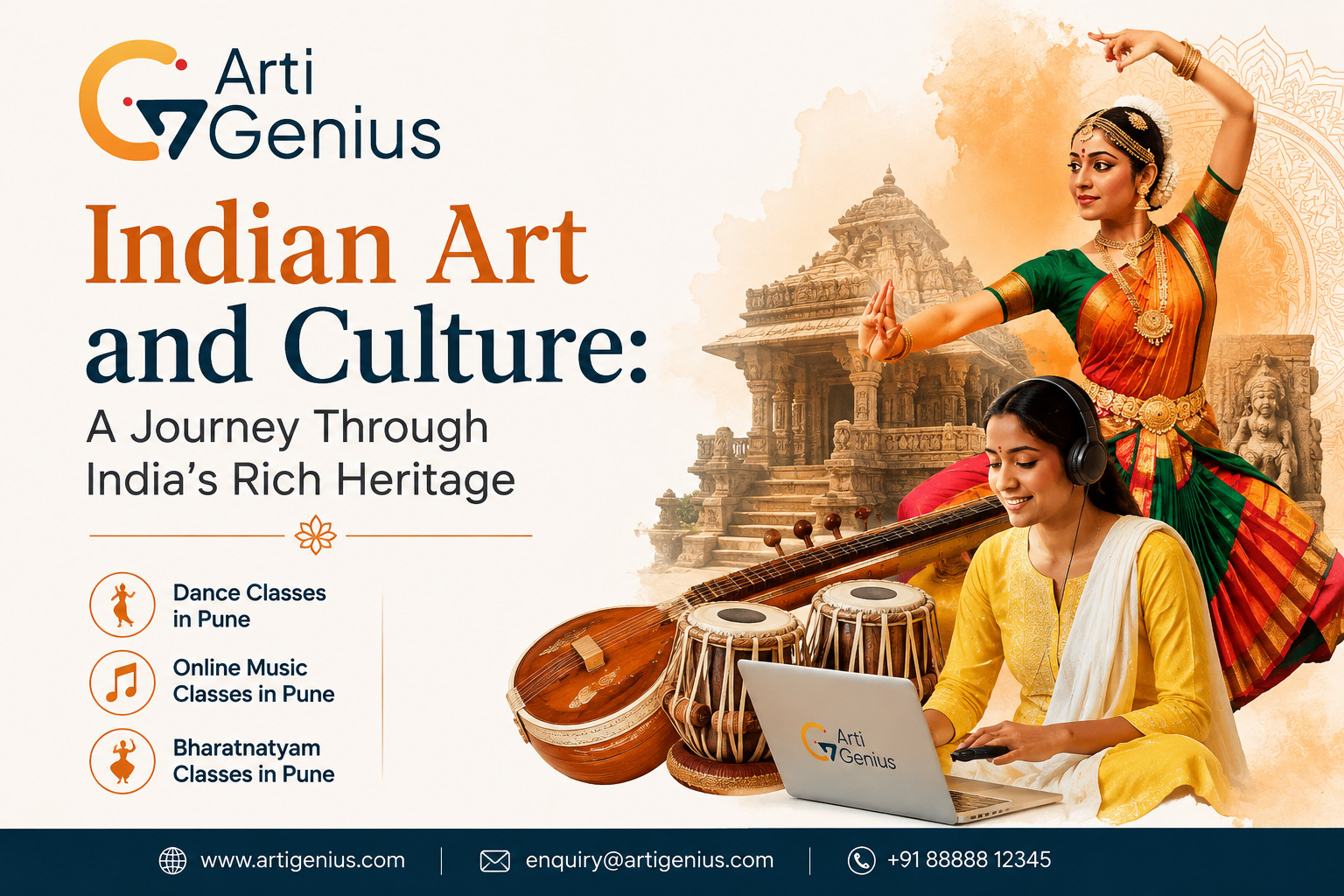
India is a land where art and culture are deeply connected to history, tradition, spirituality, and everyday life. From the rhythmic footwork of classical dance to the soulful melodies of Indian music, every art form tells a story that has travelled across generations.
India's cultural heritage includes classical and folk dances, music, theatre, painting, handicrafts, literature, architecture, festivals, and traditional storytelling. These artistic traditions are not simply forms of entertainment—they are living expressions of India's diverse communities and history.
Today, technology is making it easier for people to discover and learn these traditional art forms. Whether you are looking for dance classes in Pune, exploring online music classes in Pune, or interested in learning classical dance through Bharatanatyam classes in Pune, Indian art continues to find new audiences among younger generations.
The Rich Diversity of Indian Art and Culture
Indian culture has developed over thousands of years and has been shaped by different regions, communities, languages, traditions, and historical influences. This diversity can be seen in everything from India's architecture and textiles to its music, dance, festivals, and visual arts.
The Ministry of Culture describes India's intangible cultural heritage as including songs, dances, rituals, languages, crafts, and other creative expressions passed between generations.
Some of the most important elements of Indian art and culture include:
- Classical and folk dance
- Hindustani and Carnatic music
- Traditional painting and handicrafts
- Theatre and storytelling
- Literature and poetry
- Architecture and sculpture
- Festivals and cultural celebrations
- Traditional instruments and performing arts
Together, these forms create a cultural identity that is both deeply rooted in history and constantly evolving.
Indian Classical Dance: Stories Told Through Movement
Dance has always held an important place in Indian culture. Indian classical dance combines movement, rhythm, music, expression, storytelling, and emotion.
The principles of Indian performing arts have been influenced by ancient texts such as the Natyashastra, which discusses dance, drama, music, gestures, stagecraft, and aesthetics.
India is home to several recognised classical dance traditions, including Bharatanatyam, Kathak, Kathakali, Kuchipudi, Odissi, Manipuri, Mohiniyattam, and Sattriya. Alongside these classical forms, India has hundreds of regional folk traditions such as Garba, Bhangra, Ghoomar and Bihu.
Bharatanatyam: A Classical Tradition of Expression
Bharatanatyam is one of India's best-known classical dance forms and has its roots in Tamil Nadu. It is recognised for precise footwork, expressive gestures, rhythmic patterns, and storytelling.
The dance combines elements of movement and expression to communicate emotions and narratives. Its connection with Indian mythology, music, spirituality, and traditional performance makes it an important part of India's cultural heritage.
For learners in Maharashtra, Bharatanatyam classes in Pune can provide an opportunity to explore this classical tradition while developing rhythm, discipline, coordination, expression, and an appreciation for Indian culture.
Indian Folk Dance: Celebrating Regional Traditions
While classical dance follows established traditions and techniques, folk dances often emerge from the everyday lives, celebrations, occupations, beliefs, and customs of local communities.
From the energetic Bhangra of Punjab to the colourful Garba of Gujarat and the graceful Ghoomar of Rajasthan, folk dances showcase India's regional diversity.
Garba, for example, is traditionally associated with Navratri and has been recognised as part of India's intangible cultural heritage. It brings communities together through rhythm, movement, celebration, and devotion.
Learning these dance forms can be a wonderful way to connect with India's regional cultures while also enjoying the physical and creative benefits of dance.
Indian Music: A Tradition That Transcends Generations
Music is another essential part of Indian cultural heritage. Indian music includes classical, folk, devotional, regional, and contemporary traditions.
The two major classical systems are Hindustani music and Carnatic music. Each has its own history, techniques, repertoire, musical structures, and traditions. India also has a vast collection of folk and devotional music that varies from one region to another.
Traditional Indian instruments such as the tabla, sitar, veena, flute, mridangam, sarod, and tanpura have also played an important role in shaping India's musical identity.
Learning Indian Music in the Digital Age
Earlier, learning music often meant attending a local teacher's home or music academy. Today, technology has opened up new possibilities.
With online music classes in Pune, students can learn from the comfort of their homes while accessing structured lessons, experienced instructors, and specialised courses.
Online learning can be especially useful for students and working professionals who want to develop their musical skills while managing busy schedules.
Traditional Art and Modern Technology
One of the most interesting aspects of Indian culture today is the way traditional art forms are adapting to the digital world.
Online platforms allow students to learn dance, music, painting, theatre, literature, and other creative skills without being restricted by geographical boundaries.
This transformation does not necessarily mean that traditional art is losing its identity. Instead, technology can create another channel through which these traditions can be taught, practised, documented, and shared with new generations.
For example, someone searching for dance classes in Pune can now explore both physical and online learning opportunities. Similarly, aspiring musicians can discover online music classes in Pune, while students interested in Indian classical dance can explore Bharatanatyam classes in Pune.
Why Should We Preserve Indian Art and Culture?
Cultural heritage connects the present generation with the experiences, knowledge, creativity, and traditions of previous generations.
Preserving art and culture is important because it:
- Keeps traditional knowledge alive
- Connects younger generations with their roots
- Encourages creativity and self-expression
- Promotes regional and cultural diversity
- Creates opportunities for artists and teachers
- Strengthens cultural identity
- Allows traditional art to reach global audiences
India's cultural institutions continue to support the preservation and promotion of traditional performing arts, including classical dance, music, theatre, puppetry, and folk arts.
Experience Indian Art and Culture With ArtiGenius
Indian art is not something that belongs only in history books or museums. It is a living tradition that can be experienced, practised, and passed on.
Whether you want to discover the rhythm of dance, understand the beauty of Indian classical music, explore painting, or develop your creative abilities, learning an art form can become a meaningful connection to India's cultural heritage.
Platforms such as ArtiGenius make it possible for learners to explore creative disciplines including dance, music, painting, literature, and theatre through expert-led learning experiences.
So, whether you're searching for dance classes in Pune, looking for flexible online music classes in Pune, or hoping to begin your journey through Bharatanatyam classes in Pune, learning an Indian art form can be much more than acquiring a new skill—it can be a journey into India's incredible cultural heritage.
Conclusion
Indian art and culture represent a beautiful combination of history, creativity, tradition, and innovation. From classical dance and traditional music to folk celebrations and contemporary digital learning, India's artistic heritage continues to evolve while retaining its connection with the past.
The responsibility of preserving this heritage does not belong only to cultural institutions or professional artists. Every learner who chooses to explore, practise, and share an Indian art form contributes to keeping these traditions alive.
Discover an art form. Learn from tradition. Create your own artistic journey with ArtiGenius.
Frequently Asked Questions
1. What are the main forms of Indian art and culture?
Indian art and culture include classical and folk dance, classical and folk music, painting, sculpture, handicrafts, theatre, literature, architecture, festivals, and traditional storytelling.
2. What are some famous Indian classical dance forms?
Some recognised Indian classical dance traditions include Bharatanatyam, Kathak, Kathakali, Kuchipudi, Odissi, Manipuri, Mohiniyattam, and Sattriya.
3. Can I learn Indian classical dance in Pune?
Yes. Learners in Pune can explore different forms of dance, including classical Indian dance. Those specifically interested in Bharatanatyam can search for Bharatanatyam classes in Pune and choose a learning format that suits their goals.
4. Are online music classes effective for beginners?
Online music classes can provide flexible access to instructors and structured learning, making them a convenient option for beginners and experienced learners alike.
5. Why is it important to preserve Indian art and culture?
Preserving traditional art helps maintain cultural knowledge, strengthen connections between generations, celebrate regional diversity, and ensure that traditional practices continue to thrive in the modern world.