+91 84849 90676
 info@artigenius.com



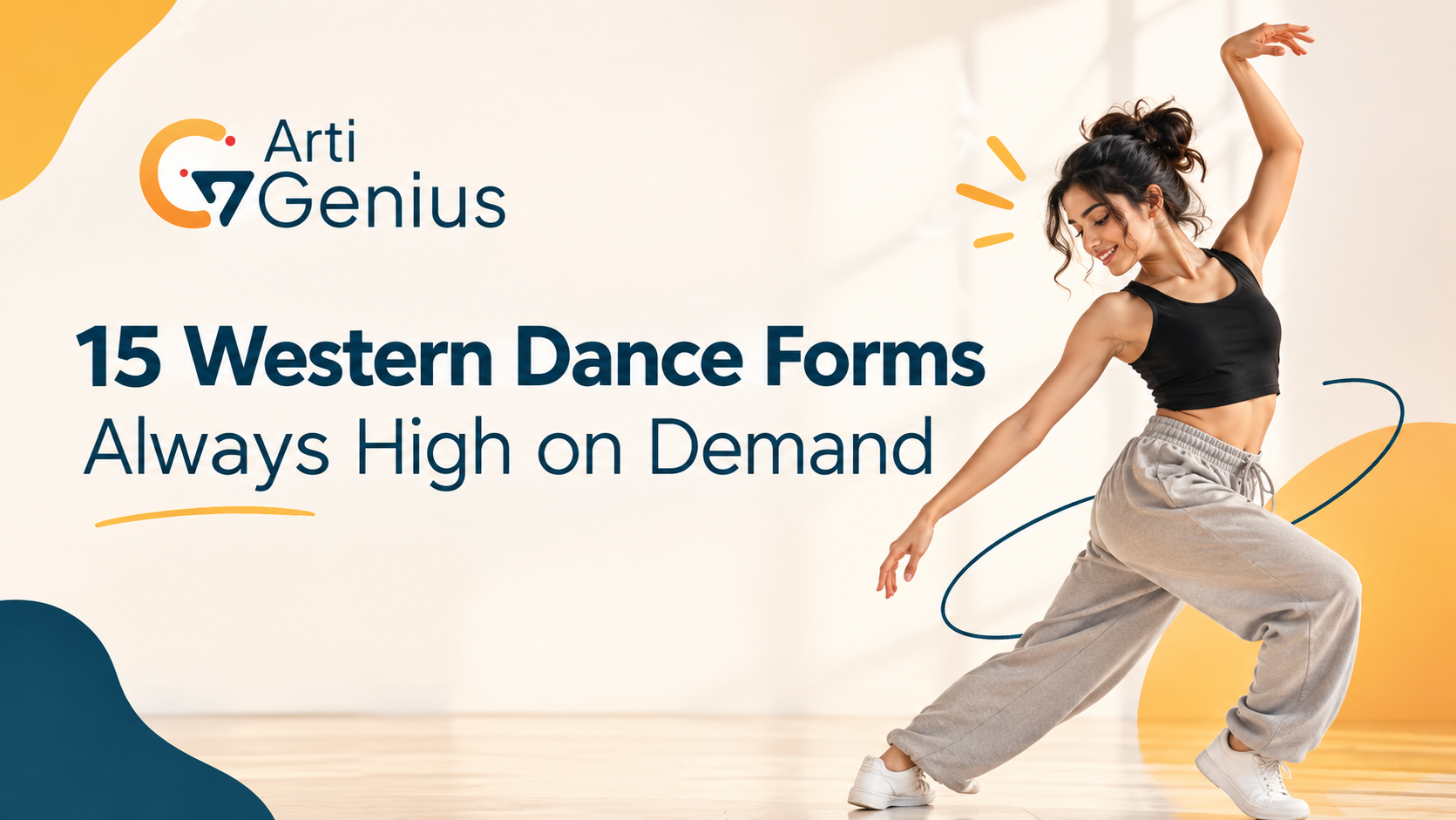
Dance is more than just moving to music. It is a way to express emotions, build confidence, improve coordination, and explore creativity. From energetic hip-hop to graceful ballet, Western dance forms offer something for every age group and skill level.
Today, learners can explore different dance styles through professional training, flexible schedules, and digital learning platforms. Whether you are a beginner exploring online dance classes or a parent looking for dance lessons for your child, understanding popular dance styles can help you choose the right one.
For learners in Maharashtra, exploring dance classes in Pune is a great way to begin a structured dance-learning journey. Traditional Indian dance forms are equally popular, with options such as online Bharatanatyam classes offering learners an opportunity to develop rhythm, discipline, and expressive movement from home.
In this guide, let’s explore 15 popular Western dance forms, their unique features, and how beginners can choose a suitable style.
What Are Western Dance Forms?
Western dance forms are dance styles that originated or developed significantly in Europe and North America. They include classical styles such as ballet, rhythmic styles such as tap dance, and modern urban styles such as hip-hop.
Each dance form has its own techniques, movements, musical patterns, and cultural influences. Some focus on precision and posture, while others encourage improvisation, rhythm, and individual expression.
15 Western Dance Forms That Continue to Attract Dance Enthusiasts
1. Ballet
Ballet is a classical dance form known for graceful movements, precise footwork, balance, and controlled body posture. Dancers practise specific positions and techniques to develop strength, flexibility, and coordination.
Who should learn ballet? Beginners who enjoy structured training and elegant movements may find ballet an interesting choice.
2. Jazz Dance
Jazz dance combines energetic movements, expressive choreography, turns, jumps, and rhythmic footwork. It is commonly seen in stage performances, music videos, and theatrical productions.
Why learn jazz dance? It can help improve coordination, musicality, flexibility, and performance confidence.
3. Hip-Hop
Hip-hop dance developed alongside hip-hop music and urban street culture. It includes movements such as popping, locking, freestyle, and breaking-related techniques.
Who is hip-hop suitable for? Children, teenagers, and adults who enjoy energetic music and creative movement can explore this style.
4. Contemporary Dance
Contemporary dance blends elements of modern dance, ballet, and other movement techniques. It emphasises fluidity, body awareness, emotion, and creative expression.
What makes contemporary dance unique? Dancers can communicate ideas and feelings through movement while developing balance, strength, and flexibility.
5. Tap Dance
Tap dance uses specialised shoes fitted with metal taps to produce rhythmic sounds against the floor. The dancer becomes both a performer and a percussionist.
What skills does tap dance develop? Rhythm, timing, foot coordination, and musical awareness.
6. Salsa
Salsa is a lively partner dance associated with Latin music and Afro-Caribbean influences. It features rhythmic steps, turns, and coordinated partner movements.
Is salsa good for beginners? Yes. Beginners can start with basic steps before progressing to turns, combinations, and partner techniques.
7. Ballroom Dance
Ballroom dance includes partner styles such as the waltz, tango, foxtrot, and quickstep. These dances emphasise posture, timing, coordination, and connection between partners.
Ballroom dance is suitable for people interested in social dancing, formal events, and structured partner training.
8. Breakdance
Breaking, commonly called breakdance, is an energetic street dance style involving toprock, footwork, freezes, and power moves.
Beginners should first learn foundational movements and body control before attempting demanding techniques. Proper instruction and suitable flooring are important for reducing injury risks.
9. Locking
Locking is a funk-based dance style characterised by sudden pauses, exaggerated gestures, expressive movements, and playful performance.
It encourages dancers to develop rhythm, confidence, and a strong connection with the music.
10. Popping
Popping involves quickly contracting and relaxing muscles to create a sharp visual effect known as a pop. Dancers often combine it with isolations, gliding, and robotic movements.
This style is popular among learners who enjoy precision, musical interpretation, and experimenting with body movement.
11. Modern Dance
Modern dance emerged as an alternative to some of the traditional rules of classical ballet. It often explores natural body movement, floorwork, balance, and individual interpretation.
It can be a good option for learners who want technical training while exploring their own movement style.
12. Lyrical Dance
Lyrical dance combines elements of ballet, jazz, and contemporary dance to interpret the emotions and meaning of a song.
Dancers use flowing movements, gestures, and choreography to tell a story. It is especially appealing to those who enjoy expressive performances.
13. Musical Theatre Dance
Musical theatre dance combines movement, acting, and music to support storytelling on stage. It often draws from jazz, ballet, tap, and other dance techniques.
Learners interested in theatre, musicals, and stage performance may enjoy this style.
14. Swing Dance
Swing dance developed alongside swing jazz music and includes styles such as Lindy Hop and East Coast Swing. It is known for its lively rhythm, partner connection, and playful footwork.
It can help learners develop timing, coordination, and social dancing skills.
15. Flamenco
Flamenco originated in Andalusia, Spain, and combines expressive dance, rhythmic footwork, hand movements, and musical traditions involving singing and guitar.
Its dramatic performance style and rhythmic complexity make it distinctive among Western and European dance traditions.
How Can Beginners Choose the Right Dance Form?
Choosing a dance style depends on your interests, fitness level, goals, and preferred learning environment. Consider the following factors before enrolling:
- Musical preference: Choose a style that matches the music you enjoy.
- Learning goals: Decide whether you want to develop fitness, improve technique, perform on stage, or dance socially.
- Current fitness level: Start with beginner-friendly movements and gradually increase difficulty.
- Instructor guidance: Look for structured lessons, technique demonstrations, and constructive feedback.
- Practice schedule: Select classes that fit your daily routine so you can practise consistently.
You do not need prior experience to begin learning dance. Regular practice and patient instruction can help you build skills over time.
Are Online Dance Classes Effective for Beginners?
Yes, online dance classes can be an effective way to learn foundational movements when they include clear demonstrations, structured lessons, and opportunities for feedback.
They allow learners to practise from home, reduce commuting time, and explore different dance styles regardless of their location.
For better results, beginners should:
- Choose a class that matches their current skill level.
- Practise in a clear, non-slip space.
- Follow warm-up and cool-down routines.
- Review techniques and repeat movements at a comfortable pace.
- Seek instructor feedback to correct posture and movement.
For physically demanding styles, supervised practice is especially valuable when learning complex techniques.
How Can You Explore Dance Classes in Pune?
Pune offers opportunities to explore different dance styles through local studios, independent instructors, and online learning platforms. When comparing dance classes in Pune, check the instructor's experience, curriculum, class size, schedule, and opportunities for individual feedback.
If travelling to a studio is inconvenient, online lessons can provide a flexible alternative. Learners can compare available courses and choose a format that suits their goals.
At ArtiGenius, learners can explore dance education through online learning options, including classical and contemporary dance. The platform provides access to different creative courses and flexible learning opportunities.
Explore the available options on the ArtiGenius website.
What Is the Difference Between Western Dance and Bharatanatyam?
Western dance includes a broad range of styles, such as ballet, jazz, hip-hop, salsa, and contemporary dance. Bharatanatyam, on the other hand, is a classical Indian dance form traditionally associated with Tamil Nadu.
Bharatanatyam incorporates structured footwork, expressive gestures known as mudras, facial expressions, rhythmic patterns, and storytelling.
Learners interested in Indian classical dance can explore online Bharatanatyam classes to understand its foundational techniques and cultural significance.
For students seeking instruction connected to a particular location, Bharatanatyam classes in Pune may offer opportunities to learn through local teachers and dance institutions. Learners who prefer home-based instruction can also consider online Bharatanatyam classes in Pune, depending on their preferred schedule and the availability of suitable instructors.
Both Western dance and Bharatanatyam can help develop coordination, discipline, musical awareness, and confidence. The right choice depends on your interests and learning objectives.
Frequently Asked Questions About Dance Classes
1. Which Western dance form is best for beginners?
Hip-hop, jazz, and beginner-level contemporary dance can be suitable starting points, depending on the learner's interests and physical comfort. Ballet is another option for those who prefer structured technical training.
2. Can adults learn dance without prior experience?
Yes. Adults can begin learning dance at any age, provided they choose an appropriate class and progress at a comfortable pace.
3. Are online dance classes suitable for children?
Online dance classes can be suitable for children when lessons are age-appropriate, the practice area is safe, and an instructor provides suitable guidance. Younger children may benefit from parental supervision.
4. How often should beginners practise dancing?
Beginners can start with two or three sessions per week, depending on their schedule and fitness level. Consistency and correct technique are more important than practising for long hours.
5. Where can I find Bharatanatyam classes in Pune?
You can compare local dance schools, independent instructors, and online learning platforms. Check the teacher's experience, curriculum, class format, and whether the lessons suit your age and skill level.
6. Can I learn Bharatanatyam online from Pune?
Yes. Learners in Pune can explore online Bharatanatyam classes that provide structured instruction, demonstrations, and feedback. Confirm the instructor's availability, lesson format, and practice requirements before enrolling.
7. What should I look for in online dance classes?
Look for qualified instructors, beginner-friendly lessons, clear demonstrations, flexible scheduling, and opportunities to receive feedback on your technique.
Conclusion
Western dance forms offer diverse ways to explore movement, music, fitness, and creativity. From the technical precision of ballet to the energy of hip-hop and the expressive qualities of contemporary dance, every style provides a different learning experience.
Whether you are exploring online dance classes, comparing dance classes in Pune, or considering online Bharatanatyam classes, start with a style that interests you and practise consistently.
ArtiGenius provides a platform to explore creative learning opportunities, including dance courses, and take the next step in your artistic journey.
Ready to explore your passion for dance? Visit ArtiGenius to discover available courses and find a learning option that suits your goals.