+91 84849 90676
.cd78382e.png) info@artigenius.com
info@artigenius.com



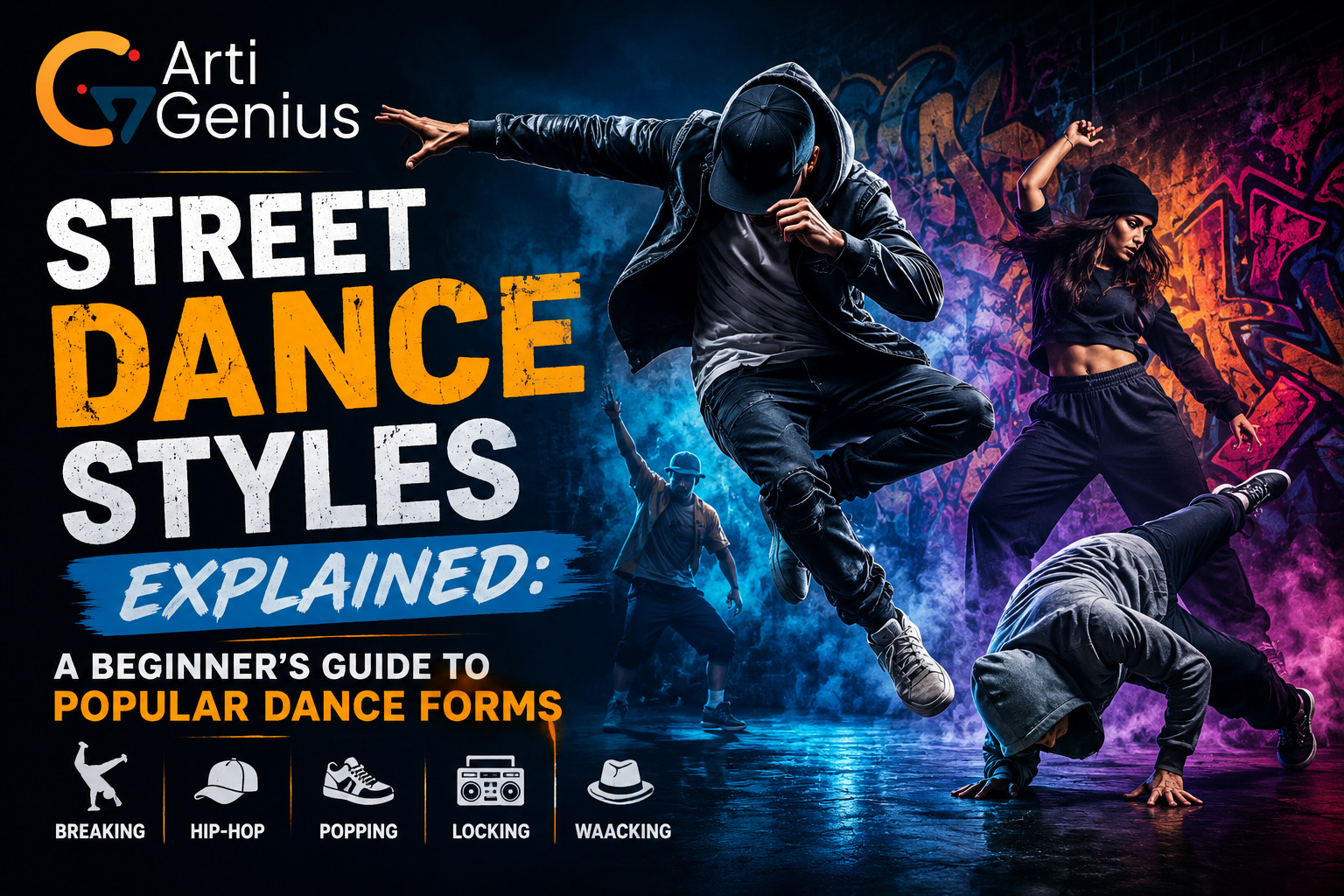
Street Dance Styles Explained
Street dance is more than just dancing on the streets. It is a form of self-expression that began in communities and later became popular worldwide through music, competitions, movies, and social media.
Today, street dance includes many different styles. Each one has its own movements, music, and culture. Whether you want to dance for fitness, fun, or professional growth, understanding these styles can help you choose the one that matches your personality.
What is Street Dance?
Street dance refers to dance styles that developed outside traditional dance schools. Most originated in clubs, parks, neighborhoods, and community gatherings before becoming part of global dance culture.
Unlike classical dance, street dance encourages creativity, freestyle movement, and personal expression.
Popular Street Dance Styles
1. Hip-Hop
Hip-hop began in New York during the 1970s. It focuses on rhythm, musicality, and freestyle.
Best for: Beginners, fitness lovers, stage performances
2. Breaking (Breakdance)
Breaking combines footwork, spins, freezes, and power moves. It requires strength, balance, and flexibility.
Best for: Advanced learners and energetic performers
3. Popping
Popping creates quick muscle contractions that make movements look robotic and sharp.
Best for: Dancers who enjoy precision and musical timing.
4. Locking
Locking is a playful dance style where dancers suddenly "lock" their body positions before continuing the movement.
Best for: High-energy performances and funk music lovers.
5. Krumping
Krumping is powerful, emotional, and expressive. It uses fast movements to tell stories and release emotions.
Best for: People who enjoy energetic dance performances.
6. House Dance
House dance combines smooth footwork with fluid body movement and is commonly performed to electronic dance music.
Best for: Dance fitness and club performances.
7. Waacking
Waacking features expressive arm movements, poses, and confidence-filled performances.
Best for: Performers who enjoy dramatic stage presence.
Which Street Dance Style Should Beginners Choose?
If you're just starting, Hip-Hop is often the easiest style to learn. It helps improve rhythm, confidence, coordination, and overall fitness before moving to more advanced forms.
Benefits of Learning Street Dance
- Improves fitness and stamina
- Builds confidence
- Reduces stress
- Enhances creativity
- Improves coordination and flexibility
- Helps develop stage presence
Final Thoughts
Every street dance style has its own story and personality. Some focus on strength, while others emphasize rhythm or creativity. The best dance style is the one you enjoy practicing consistently.
Frequently Asked Questions
Is street dance suitable for beginners?
Yes. Hip-Hop is considered one of the most beginner-friendly street dance styles.
Which street dance style burns the most calories?
Breaking and Hip-Hop are among the most physically demanding styles.
Can children learn street dance?
Yes. Many dance schools offer beginner-friendly classes for children and teenagers.
How long does it take to learn street dance?
Most beginners become comfortable with basic movements within 2–3 months of regular practice.