+91 84849 90676
.cd78382e.png) info@artigenius.com
info@artigenius.com



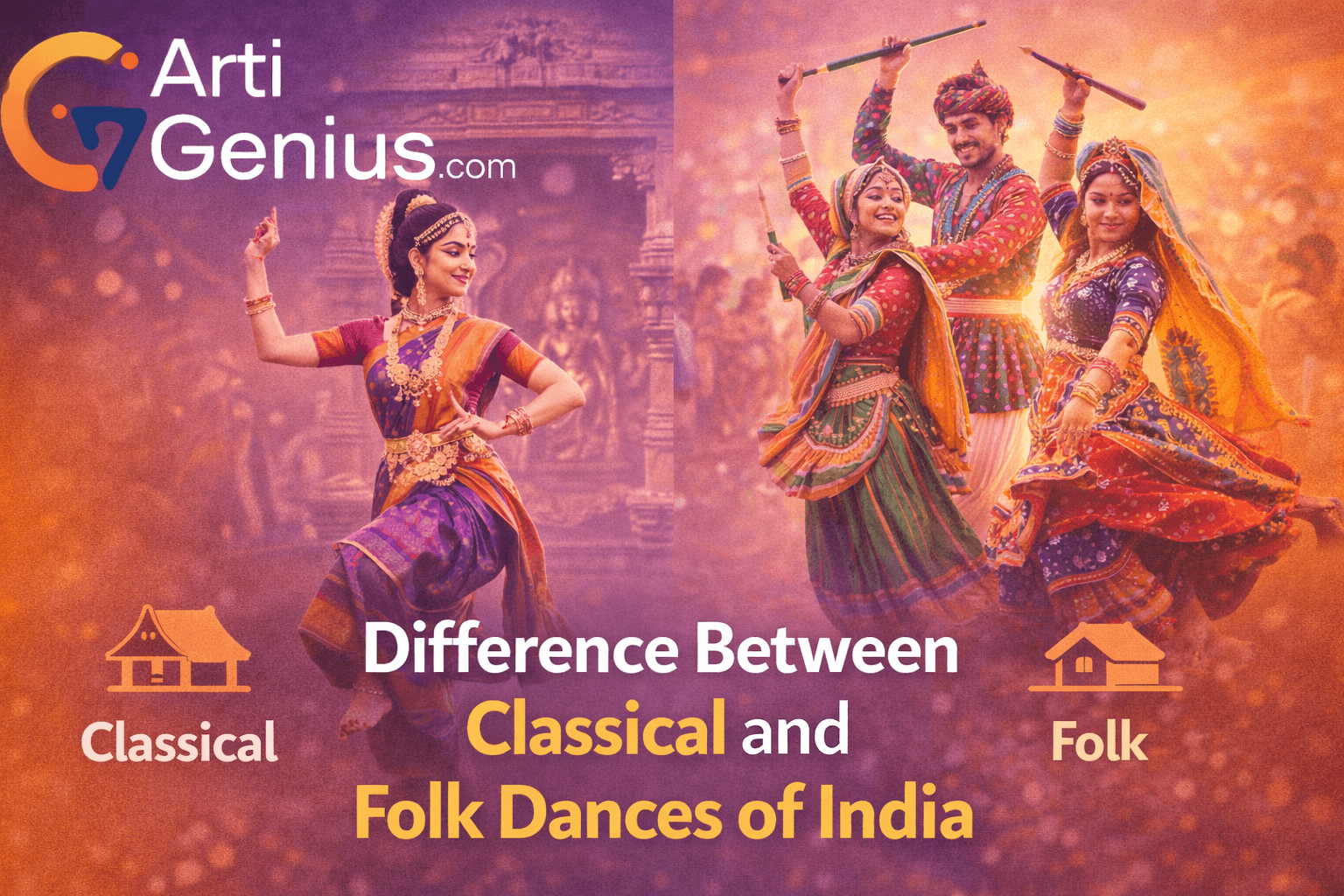
India’s cultural diversity is deeply reflected in its dance traditions. Dance in India is not just a form of entertainment; it is a medium of storytelling, devotion, celebration, and social expression. Indian dances are broadly classified into classical dances and folk dances. While both are rooted in tradition, they differ in origin, style, training, and purpose.
This blog explains the difference between classical and folk dances of India in a clear and simple way.
Understanding Classical Dances of India
Classical dances of India are highly refined and structured art forms that have evolved over centuries. These dances are based on ancient texts and follow a strict framework of movements, expressions, and rhythm.
Well-known classical dance forms include Bharatanatyam, Kathak, Kathakali, Odissi, and Kuchipudi.
Classical dances require years of dedicated training under a guru. Every movement, hand gesture, eye expression, and posture has meaning. These dances often narrate stories from Indian epics, mythology, and spiritual traditions. Performances are usually held on formal stages or in temple settings, and dancers wear symbolic costumes and traditional jewelry.
Understanding Folk Dances of India
Folk dances originate from the everyday lives of people and reflect regional customs, seasonal cycles, and social celebrations. These dances are informal, energetic, and deeply connected to local culture.
Popular folk dances include Bhangra, Garba, Ghoomar, Lavani, and Bihu.
Folk dances do not follow strict rules or classical texts. They are usually learned naturally through participation in festivals, weddings, and community gatherings. The focus is on group participation, joy, and celebration rather than technical perfection.
Key Differences Between Classical and Folk Dances of India
The origin of classical dances can be traced back to ancient scriptures, royal courts, and temple traditions, whereas folk dances developed naturally within villages and local communities.
In terms of training, classical dance demands formal instruction and long-term practice under trained teachers. Folk dances, on the other hand, are passed down through generations and can be learned informally.
When it comes to structure and technique, classical dances follow precise rules, hand gestures, facial expressions, and rhythmic patterns. Folk dances are more flexible and spontaneous, allowing performers to express happiness and social bonding.
The themes also differ greatly. Classical dances mainly depict spiritual stories, mythological characters, and philosophical ideas. Folk dances revolve around harvests, seasons, love, daily life, and regional festivals.
Costumes and music in classical dance are symbolic and follow traditional standards, while folk dances use colorful regional attire and local instruments that reflect the culture of the area.
Cultural Importance of Both Dance Forms
Both classical and folk dances play a vital role in preserving India’s cultural heritage. Classical dances safeguard ancient traditions and artistic discipline, while folk dances keep regional customs alive and vibrant.
Together, they:
- Represent India’s unity in diversity
- Preserve traditions and storytelling
- Encourage social bonding and cultural pride
- Showcase Indian culture on national and global platforms
Neither form is superior to the other; both serve unique purposes in India’s cultural ecosystem.
Which Dance Form Should You Choose?
If you enjoy discipline, storytelling, and deep artistic expression, classical dance may suit you. If you prefer energetic movement, group performances, and festive joy, folk dance may be the better choice. Many modern dancers learn both forms to gain cultural depth and versatility.
Frequently Asked Questions
What is the main difference between classical and folk dances of India?
Classical dances are structured and text-based, while folk dances are informal and community-driven.
Are folk dances easier to learn than classical dances?
Yes, folk dances are generally easier and do not require long-term formal training.
Why are classical dances considered more disciplined?
Classical dances follow strict rules, hand gestures, expressions, and rhythmic patterns defined by ancient traditions.
Conclusion
The difference between classical and folk dances of India lies in their origin, style, and purpose. Classical dances reflect discipline, spirituality, and artistic refinement, while folk dances celebrate life, culture, and community spirit.
Together, they form the heartbeat of India’s rich and diverse dance heritage.