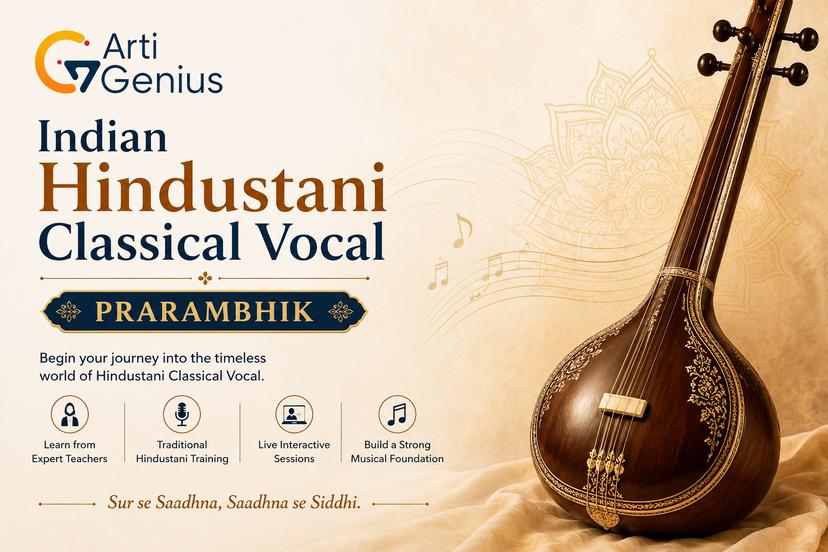
Indian Hindustani Classical Vocal - Prarambhik

Beginner Online Music Classes – Learn Indian Classical Music OnlineThese online music classes are designed for beginners who want to learn music online while building a strong foundation in Indian cla...
0 Ratings  

Hindi, English

preview
Type of class
1-To-1
Class Duration
45 Min
Recommended
3 class in a week
No. of classes
One Year course
Location
Online
₹ 750 Fee/Class

Tutor

Varsha Verma

(5 years Experience)

0 Reviews

Course Content

Beginner Online Music Classes – Learn Indian Classical Music Online

These online music classes are designed for beginners who want to learn music online while building a strong foundation in Indian classical music. Through structured online music lessons, students understand the basic principles of sound, swaras, rhythm, and vocal practice. This course combines theory and practical training so learners can develop musical knowledge, voice control, and confidence while practicing from the comfort of their homes.

Introduction to Indian Classical Music

In the beginning of these online music classes, students are introduced to the fundamentals of Indian classical music. Learners explore the concept of Nad (sound), which is the basic source of music. They also understand Shruti, the microtones that form the foundation of musical notes, and Swar, the musical notes used in compositions.

Students also learn about Saptak, which represents the three octaves used in Indian classical music: Mandra Saptak (lower octave), Madhya Saptak (middle octave), and Taar Saptak (higher octave). Understanding these concepts helps students recognize pitch and vocal range during online music lessons.

Understanding Swaras and Musical Structure

Another important concept taught in these learn music online sessions is the difference between Shuddha Swaras and Vikrit Swaras. Students learn how these notes are used to create different ragas and musical expressions.

The course also introduces the basic structure of Taal, which is the rhythmic cycle that supports musical compositions. Students learn popular taals such as Teentaal, Keharwa, and Dadra, helping them understand rhythm and timing while performing songs in online music classes.

Alankar Practice

To strengthen vocal control and note clarity, students practice Alankar, which are structured note patterns used for training. These exercises are an essential part of online music training because they improve pitch accuracy, voice flexibility, and musical understanding.

Learning alankars also helps students develop better control over swaras while preparing them for more advanced classical music training.

Breathing and Voice Culture

Practical training begins with breathing and voice culture exercises, which help students improve voice stability and control. These exercises are important for maintaining proper vocal health while singing.

Through regular practice in these online music lessons, students learn how to manage breath support, maintain pitch, and sing with clarity and confidence.

Singing Swaras and Alankar Practice

Students practice Shuddha Swaras using Aroh (ascending) and Avaroh (descending) patterns. This helps learners understand the movement of notes and develop a strong sense of pitch.

They also practice Alankars in Teentaal, which combines note patterns with rhythm. This practice improves both musical timing and vocal accuracy in online music classes.

Bhajans and Musical Expression

To make learning enjoyable, students practice simple Bhajans and Geet during the course. Singing devotional or light compositions helps learners apply the swaras and rhythm they have learned in a musical context.

These sessions also help students develop expression, emotion, and musical confidence while they learn music online.

Introduction to Riyaaz Discipline

An important part of classical training is Riyaaz, which refers to regular practice and dedication to music. Students are guided on how to build a daily practice routine that strengthens their voice and musical skills.

By the end of these online music classes, students gain a strong understanding of musical basics, vocal techniques, and rhythm. These online music lessons help beginners develop confidence and begin their journey in Indian classical music with the right guidance and practice.

#OnlineMusicClasses #LearnMusicOnline #OnlineMusicLessons #IndianClassicalMusic #MusicForBeginners #VocalTrainingOnline #MusicTheoryBasics #RiyaazPractice #ClassicalMusicLearning #MusicFromHome


• FAQS

Questions? Answers.

Do you have any other question?

1. What will beginners learn in these online Indian classical music classes?

+

These beginner online music classes teach the fundamental concepts of Indian classical music, including Nad (sound), Shruti, Swar, and Saptak. Students also learn rhythm through basic Taals like Teentaal, Keharwa, and Dadra. The course combines music theory with practical vocal training, helping learners develop pitch accuracy, voice control, and confidence while learning music online from home.

2. Are these online music lessons suitable for complete beginners?

+

Yes, these online music classes are specifically designed for beginners with little or no musical background. The lessons start with basic music theory and gradually introduce swaras, rhythm, and simple compositions. Step-by-step guidance ensures that students understand the foundations of Indian classical music before moving toward more advanced vocal practice and musical expression.

3. What are the main benefits of learning Indian classical music online?

+

Learning Indian classical music online allows students to develop musical knowledge, vocal strength, and rhythm skills from the comfort of their homes. These online music lessons improve pitch accuracy, breathing control, and musical discipline through regular riyaaz practice. The course also helps beginners build confidence and develop a deeper appreciation for classical music traditions.

4. How do online music classes help improve voice control and singing skills?

+

These online music classes include structured breathing exercises, voice culture training, and alankar practice. These techniques strengthen the voice, improve breath support, and help students maintain proper pitch. Regular practice of swaras and alankars also enhances vocal flexibility and clarity, which are essential skills for learning Indian classical music effectively.

5. What is Alankar practice and why is it important in music training?

+

Alankar practice involves singing structured patterns of musical notes that improve vocal technique and note accuracy. In online music lessons, alankars help students strengthen their understanding of swaras and rhythm. This practice builds voice flexibility, improves pitch control, and prepares beginners for advanced Indian classical music training.

6. Will students learn rhythm and taal in these online music classes?

+

Yes, rhythm is an important part of these learn music online sessions. Students are introduced to the concept of Taal, which forms the rhythmic framework of music. They practice common taals such as Teentaal, Keharwa, and Dadra, helping them understand timing, rhythm cycles, and how musical notes fit within structured beats.

7. How do these online music lessons teach swaras and pitch control?

+

Students learn Shuddha Swaras through Aroh (ascending) and Avaroh (descending) note patterns. This practice helps beginners understand the movement of musical notes and recognize pitch changes. Combined with alankar exercises and riyaaz practice, these online music classes help learners develop strong pitch control and a better understanding of Indian classical music structure.

8. Do students get to sing songs or compositions during the course?

+

Yes, students practice simple bhajans and geet as part of the course. These compositions help learners apply the swaras, rhythm, and vocal techniques they have studied in online music lessons. Singing these pieces also improves musical expression, confidence, and the ability to perform music with emotion and clarity.

9. How long does it take to learn the basics of Indian classical music online?

+

Most beginners can understand the basic concepts of Indian classical music within a few weeks of consistent learning. With regular online music classes and daily riyaaz practice, students gradually develop better pitch, rhythm, and vocal control. Progress depends on dedication, practice routine, and active participation during the lessons.

10. Can learning Indian classical music online lead to advanced music training or career opportunities?

+

Yes, these beginner online music classes build the foundation required for advanced classical music training. After mastering basic swaras, rhythm, and vocal techniques, students can continue learning complex ragas, compositions, and performance skills. Strong training in Indian classical music can also open opportunities in singing, teaching, music performance, and creative music careers.