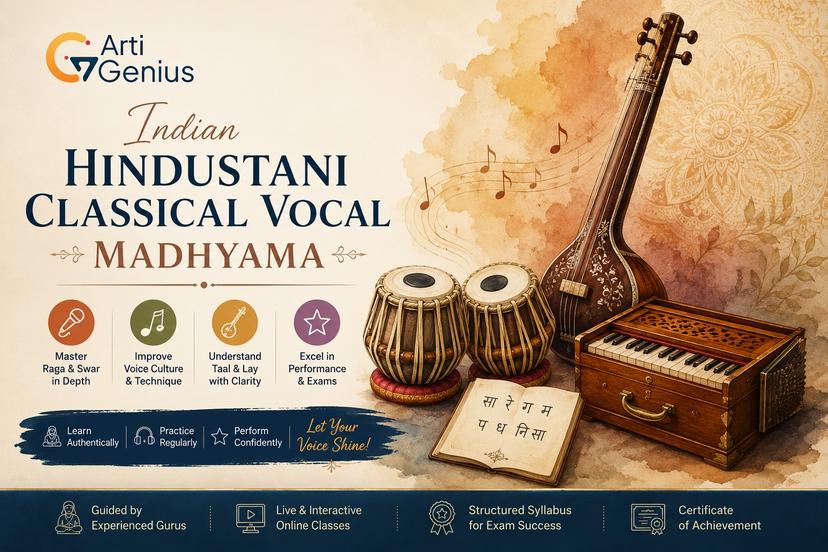
Indian Hindustani Classical Vocal - Madhyama

These online music classes are designed for students who want to learn music online while building a strong foundation in Indian classical music. Through structured online music lessons, learners expl...
0 Ratings  

Hindi , English

preview
Type of class
1-To-1
Class Duration
45 Min
Recommended
3 class in a week
No. of classes
100 - 110
Location
Online
₹ 1,000 Fee/Class

Tutor

Varsha Verma

(5 years Experience)

0 Reviews

Course Content

These online music classes are designed for students who want to learn music online while building a strong foundation in Indian classical music. Through structured online music lessons, learners explore essential concepts of ragas, rhythm, and musical expression. This program combines both theory and practical learning so students can understand the depth of classical music while improving their performance skills from the comfort of their homes.

Introduction to Music Theory

A strong theoretical base is the starting point of classical training. In these online music classes, students begin by understanding the Thaat system, which forms the foundation of many ragas in Hindustani classical music. The course introduces the 10 Thaats, helping learners understand how different ragas are derived from these musical scale structures.

Students also learn about the Jaati of Ragas, which explains how ragas are classified based on the number of notes used in ascending and descending movements. Understanding this concept helps learners recognize the identity of ragas and strengthens their theoretical knowledge during online music training.

Understanding Rhythm and Tempo

Rhythm is an essential part of every musical performance. During these online music lessons, students learn about Laya, which refers to the tempo or speed of music. The three main types of tempo used in classical compositions are explained clearly: Vilambit (slow tempo), Madhya (medium tempo), and Drut (fast tempo).

Students also study the structure of Taal, which is the rhythmic cycle used in Indian classical music. Important components such as Matra (beats), Vibhag (sections), Sam (the main beat), and Khali (empty beat) are explained in detail. Learning these elements helps students maintain rhythm and accuracy while performing compositions in online music classes.

Understanding Raga Structure

Another important concept in these learn music online sessions is Raga Lakshan, which describes the defining characteristics of a raga. Students learn how particular notes, movements, and phrases create the mood and identity of each raga. Understanding these features allows learners to perform ragas with the correct structure and emotional expression.

Practical Raga Training

Practical learning plays a major role in these online music classes. Students practice important beginner-level ragas commonly taught in Hindustani classical training. The ragas covered include Yaman, Bhupali, Khamaj, and Bhairav.

For each raga, students learn the Aroh (ascending scale) and Avaroh (descending scale) along with the Pakad, which is the signature phrase that captures the essence of the raga. Practicing these patterns helps learners identify ragas and perform them correctly during online music lessons.

Composition and Performance Practice

In these online music classes, students also learn Chhota Khayal in Teentaal, a short classical composition that helps them understand how ragas are performed within a rhythmic cycle. This practice strengthens both theoretical understanding and practical singing skills.

Students are also introduced to basic Alap and Taan, which are important improvisation techniques in classical music. These exercises help develop voice control, creativity, and expressive singing. Depending on the learner’s interest, students may also explore Dhrupad or Geet as an optional part of their training.

By the end of these online music classes, students gain a strong understanding of classical music theory, rhythm structures, and raga performance. These online music lessons help learners build confidence, improve musical knowledge, and experience the richness of Indian classical traditions while they learn music online.

#OnlineMusicClasses #LearnMusicOnline #OnlineMusicLessons #IndianClassicalMusic #RagaLearning #MusicTheory #ClassicalMusicTraining #MusicEducation #HindustaniMusic #MusicLearningFromHome


• FAQS

Questions? Answers.

Do you have any other question?

1. What will I learn in these online Indian classical music classes?

+

These online music classes teach the fundamentals of Indian classical music, including music theory, ragas, rhythm, and performance techniques. Students learn the Thaat system, raga structure, and important rhythmic elements such as Taal and Laya. Along with theory, learners practice ragas like Yaman and Bhupali, helping them develop both musical understanding and practical singing skills from home.

2. Who can join these online music lessons? Are beginners allowed?

+

Yes, these online music lessons are suitable for beginners as well as learners with basic musical knowledge. The course starts with fundamental concepts like the Thaat system, Jaati of ragas, and rhythm structure. Because the lessons are structured step-by-step, anyone interested in learning Indian classical music online can join and gradually build a strong musical foundation.

3. What ragas will students learn during the course?

+

During these learn music online sessions, students practice beginner-friendly ragas commonly taught in Hindustani classical music training. These include Raga Yaman, Bhupali, Khamaj, and Bhairav. Learners study each raga’s Aroh (ascending scale), Avaroh (descending scale), and Pakad, helping them recognize raga patterns and perform them correctly in online music classes.

4. How do these online music classes teach rhythm and tempo?

+

Rhythm training is a key part of these online music lessons. Students learn about Laya (tempo), including Vilambit, Madhya, and Drut speeds used in classical compositions. The course also explains the structure of Taal, covering Matra, Vibhag, Sam, and Khali. Understanding these rhythmic elements helps students maintain timing and accuracy while singing classical compositions.

5. What practical skills will I gain from this classical music course?

+

In addition to theory, students gain hands-on experience through practical raga training and performance exercises. They learn Chhota Khayal in Teentaal, basic Alap, and Taan techniques that improve voice control and improvisation skills. These online music classes help learners build confidence, develop musical expression, and perform classical ragas with proper structure.

6. How long does it take to build a foundation in Indian classical music online?

+

The duration depends on the learning pace, but structured online music classes help students build a strong foundation within a few months. By consistently attending lessons and practicing ragas, rhythm patterns, and compositions, learners gradually improve their understanding of Indian classical music theory and performance while progressing at a comfortable pace from home.

7. What are the benefits of learning music through online classes?

+

Learning through online music classes allows students to study from the comfort of their homes while still receiving structured training. Online lessons provide flexibility, recorded practice references, and guided learning of ragas, rhythm, and theory. This format makes it easier for students to regularly practice Hindustani classical music and maintain consistent progress.

8. Will this course help improve my singing and musical expression?

+

Yes, these online music lessons focus on both technical and expressive aspects of music. Through raga practice, Alap, and Taan exercises, students improve voice control, pitch accuracy, and improvisation ability. Regular training in classical compositions also helps learners develop musical sensitivity and confidence while performing Indian classical music.

9. Is this online music course valuable for students interested in a music career?

+

Absolutely. A strong foundation in Indian classical music is valuable for singers, performers, and music enthusiasts. These online music classes help learners understand ragas, rhythm structures, and classical compositions, which are essential for advanced training, stage performances, or further study in Hindustani classical music and music education.

10. What makes these online music classes different from other music courses?

+

These learn music online classes combine structured music theory with practical performance training. Students explore the Thaat system, raga structure, rhythm cycles, and classical compositions while practicing ragas and improvisation techniques. This balanced approach ensures learners gain a deep understanding of Indian classical music while developing real performance skills.