+91 84849 90676
.cd78382e.png&w=48&q=75) info@artigenius.com
info@artigenius.com



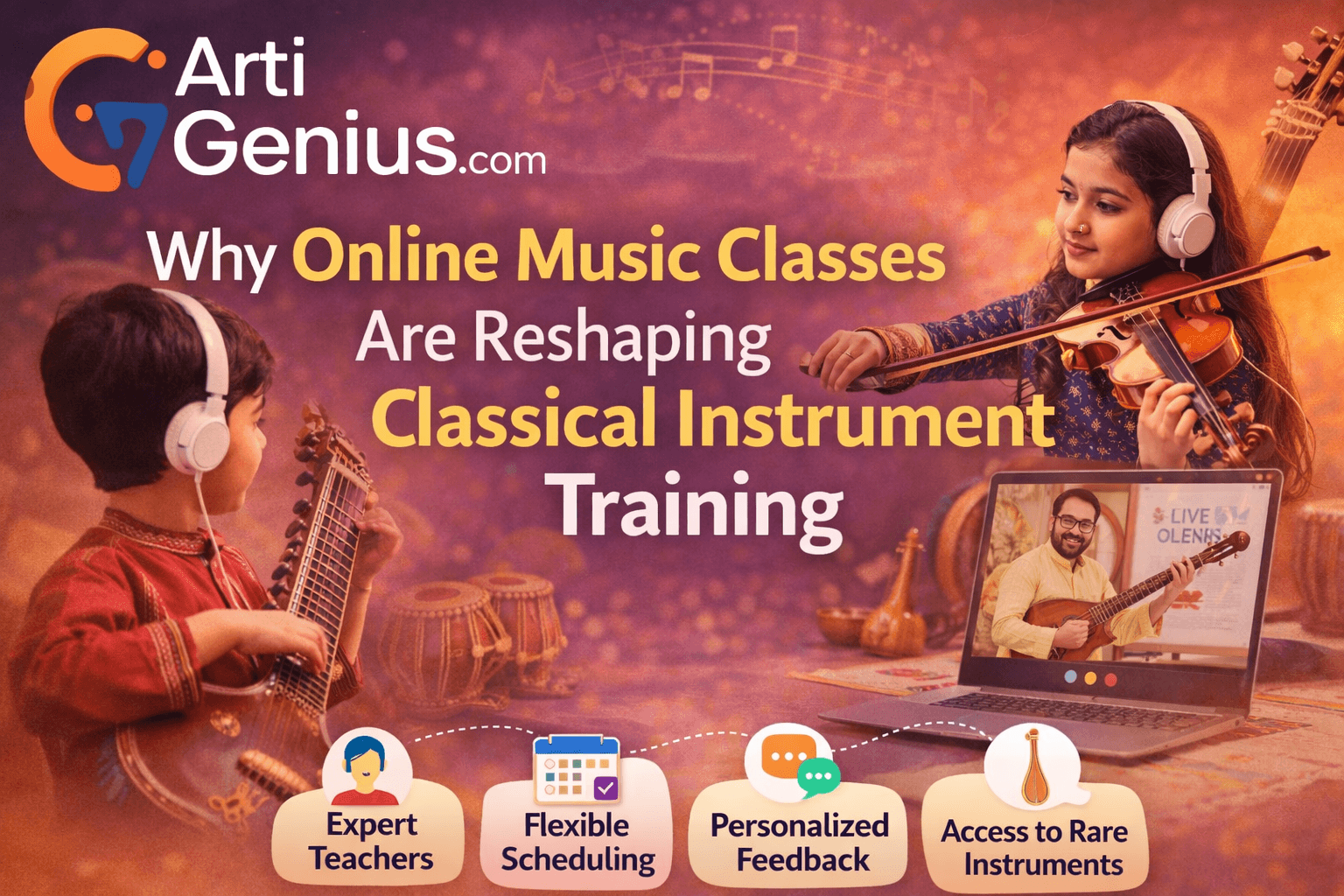
The way people learn music has changed dramatically over the past few years. What once required physical presence, rigid schedules, and long commutes can now be accessed from anywhere through structured online lessons. This shift is especially noticeable in classical instrument training, where students are increasingly choosing online music classes for convenience, flexibility, and consistent progress.
From beginners exploring their first instrument to experienced learners refining advanced techniques, online learning has opened new possibilities that traditional classroom settings often struggled to provide. But what exactly is driving this transformation, and can classical instruments truly be learned online with the same effectiveness?
The Growing Appeal of Online Music Classes
Modern learners seek flexibility without compromising quality, and online music classes meet this expectation perfectly. Students no longer need to align their schedules strictly with a teacher’s availability or spend time traveling to studios. Lessons can be attended from home, making music education easier to integrate into busy routines.
For classical instruments such as tabla, sitar, violin, flute, or harmonium, regular practice is essential. Online classes allow learners to maintain continuity even during travel, exams, or professional commitments. This accessibility has significantly reduced barriers that previously discouraged many aspiring musicians.
Can Classical Instruments Be Learned Online Effectively?
One of the most common questions students ask is whether online music training can match the effectiveness of in-person instruction. The answer largely depends on the structure of the program, the teacher’s expertise, and the learner’s discipline.
Well-designed online classes often include live interactive sessions, real-time feedback, guided exercises, and practice routines. High-quality video and audio tools enable instructors to demonstrate techniques clearly, observe student performance, and correct mistakes instantly. In many cases, learners benefit from recorded sessions, which allow them to revisit lessons and refine their practice.
While physical presence has its advantages, online training offers a different kind of efficiency by enabling repeated review and flexible pacing.
Why Online Learning Works Well for Classical Training
Classical music education emphasizes repetition, precision, and gradual mastery. Online music classes support these principles by encouraging structured practice outside lesson hours. Students can record their own playing, evaluate progress, and work on corrections more consciously.
Instruments that rely heavily on rhythm, finger positioning, breath control, or hand coordination can be taught effectively through close visual demonstrations. Teachers can zoom into specific movements, break down techniques step by step, and share digital learning resources that enhance understanding.
Additionally, learners often experience a more comfortable learning environment at home, which can reduce performance anxiety and promote focused practice.
Frequently Searched Questions About Online Music Classes
1. Are online music classes suitable for beginners?
Yes, beginners often adapt well to online learning. Structured programs introduce fundamentals gradually, ensuring that students build a strong technical foundation. Live interaction allows immediate clarification of doubts, while recordings help reinforce lessons.
2. How do teachers correct mistakes in online classes?
In live sessions, instructors observe posture, hand movement, and technique through video. Teachers provide verbal guidance, visual demonstrations, and sometimes slow-motion breakdowns to address errors. Many platforms also encourage students to submit practice videos for detailed feedback.
3. What equipment is needed for online instrument training?
Most learners require a stable internet connection, a device with a camera, and basic audio clarity. Depending on the instrument, students may use simple accessories like a microphone or stand, but professional studio setups are not mandatory for effective learning.
4. Do online music classes provide performance opportunities?
Many online academies organize virtual recitals, assessments, and workshops. These events allow students to showcase progress, gain confidence, and receive broader feedback. Digital performances have become widely accepted and accessible.
5. How do students stay motivated in online learning?
Consistency is driven by structured lesson plans, teacher guidance, and personal practice routines. Online classes often include progress tracking, milestone-based learning, and recorded materials that help learners remain engaged.
Advantages That Are Driving the Shift
Several factors explain why online music classes are reshaping classical instrument training:
Greater Accessibility
Students can learn from experienced teachers regardless of location, removing geographical limitations.
Flexible Scheduling
Lessons can be arranged around school, work, or personal commitments, improving long-term consistency.
Recorded Learning Resources
Session recordings help reinforce concepts and support independent practice.
Comfortable Learning Environment
Learning from home often reduces stress and encourages experimentation.
Wider Teacher Selection
Learners gain access to specialized instructors without relocation or travel.
Challenges and How Learners Overcome Them
Like any learning format, online music education presents challenges. Technical issues, distractions, or lack of physical presence can sometimes affect the experience. However, most students overcome these obstacles by establishing dedicated practice spaces, maintaining discipline, and choosing structured programs with interactive feedback.
The effectiveness of online training ultimately depends on commitment and instructional quality rather than the medium itself.
The Future of Classical Instrument Learning
Online music classes are not replacing traditional training but expanding learning possibilities. Hybrid models, combining online lessons with occasional workshops or performances, are becoming increasingly common. This blended approach offers flexibility while preserving the depth of classical education.
As technology continues to improve, online learning is expected to play an even greater role in making classical music education more inclusive, personalized, and sustainable.
Conclusion
Classical instrument training has long been associated with tradition and discipline, yet modern learning methods are proving that innovation and heritage can coexist. Online music classes provide accessibility, flexibility, and powerful learning tools that support serious musical development.
For many students, the ability to learn consistently without logistical constraints has made online training not just a temporary alternative but a preferred choice. As digital education evolves, classical music learning is becoming more adaptable and widely available than ever before.